
Custom AI Software for Small Businesses in 2026: A Practical Guide to Automating Work Without Losing Control
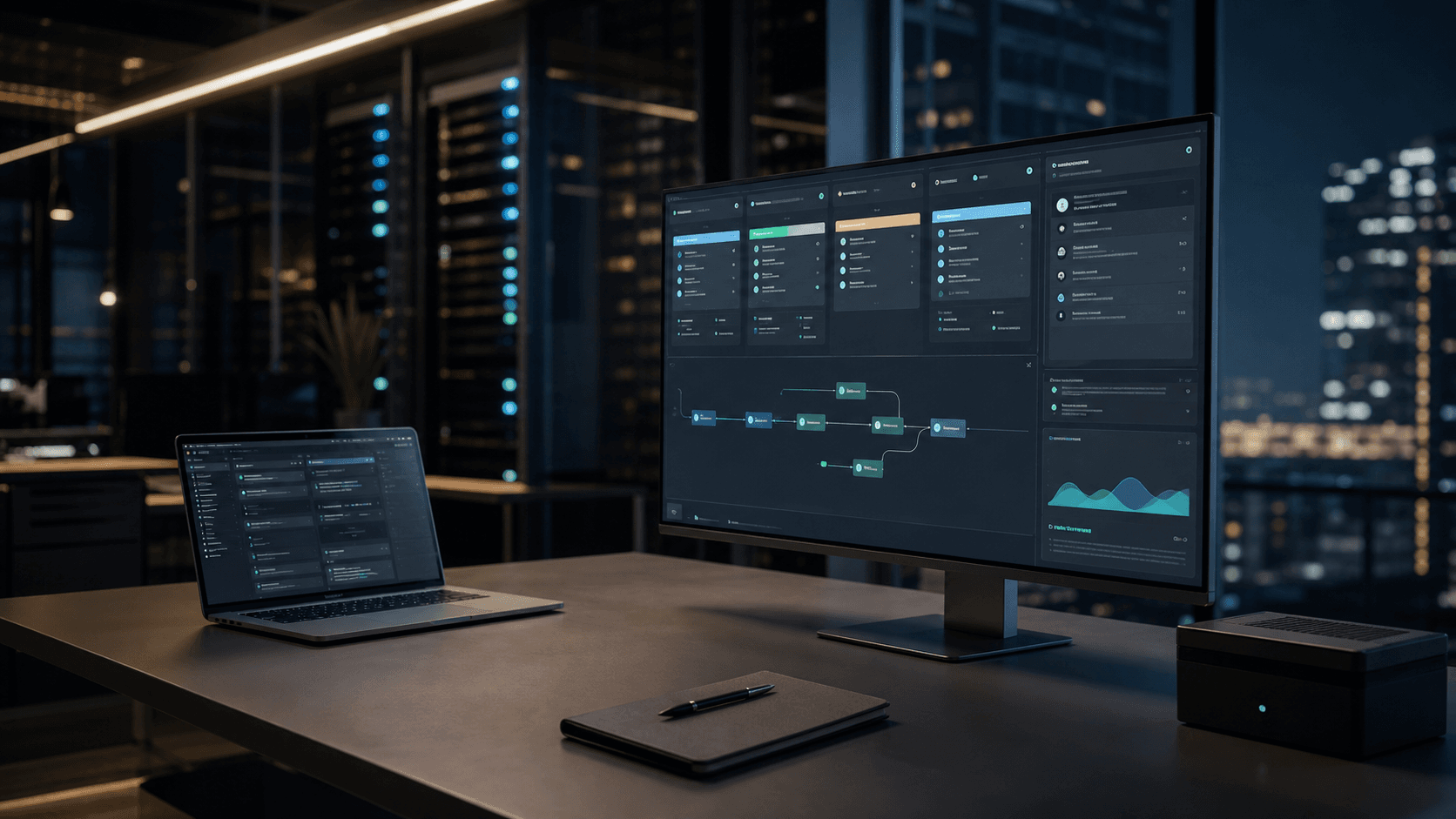
Custom AI Software for Small Businesses in 2026
The question is no longer whether a small business should use artificial intelligence. The better question is where AI can save time, reduce errors, and improve sales without turning the business into a black box.
In 2026, the companies getting the most value from AI are not the ones installing the most tools. They are the ones connecting real workflows: lead capture, quotes, operations, inventory, support, reporting, and decision-making.
Quick Answer
A small business should invest in custom AI software when it has repetitive workflows, scattered data, or decisions that depend too heavily on spreadsheets, email threads, messages, and internal memory. The best first project is usually a focused operational platform: a CRM, internal dashboard, customer portal, or automation layer connected to the tools the team already uses.
What "Custom AI Software" Actually Means
It does not mean adding a chatbot to a website and hoping for magic. A useful AI system combines three layers:
- Digital product: a web app, internal dashboard, mobile app, or private portal.
- Structured data: customers, orders, bookings, support tickets, documents, payments, or history.
- Intelligent automation: classification, summarization, alerts, recommendations, document generation, or semantic search.
AI creates value when it understands the business context. That is why custom software often outperforms generic tools when the workflow is part of the company advantage.
Processes a Small Business Should Automate First
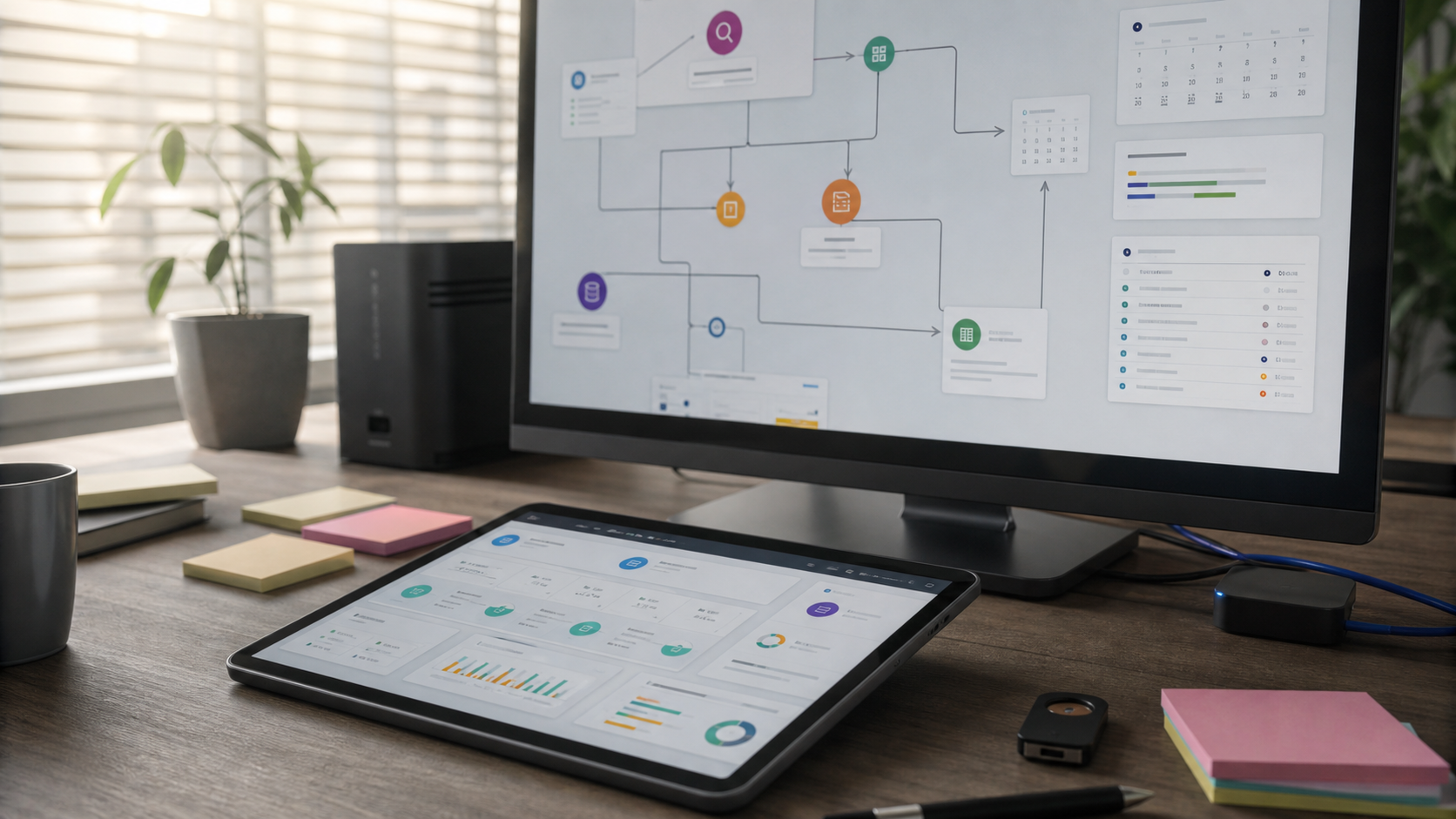
1. Lead Capture and Sales Follow-Up
Many small businesses lose revenue because leads arrive through different channels and nobody knows exactly what stage each opportunity is in. A custom system can:
- Unify forms, calls, emails, and messages.
- Prioritize leads using defined criteria.
- Generate first replies and proposal drafts.
- Remind the team before a prospect goes cold.
2. Quotes and Documents
If the team repeats similar proposals, AI can accelerate work while keeping humans in charge:
- Draft quotes using services, prices, and margins.
- Summarize customer requirements.
- Detect missing information before a proposal is sent.
- Turn long requests into clear tasks.
3. Internal Operations
An internal dashboard can replace dozens of spreadsheets. Examples include:
- Booking, order, or delivery management.
- Inventory or availability tracking.
- Incident alerts.
- Automated management reports.
4. Customer Support
AI can help teams answer faster, but it needs access to real data:
- Order status.
- Conversation history.
- Internal policies.
- Updated FAQs.
The goal is not to pretend a machine can handle everything. The goal is to give the team better context and reduce response time.
When Custom Software Makes Sense
Custom software is a strong fit when:
- The workflow is part of your competitive advantage.
- The team duplicates data across several tools.
- Generic software has already proven too rigid.
- You need to integrate web, app, database, payments, or automation.
- You want AI to use business-specific information.
It is usually not the right move when:
- You do not yet know which process needs improvement.
- An existing tool covers 90% of the need.
- There is no internal owner to validate decisions.
- You want a cheap solution with no maintenance.
How Much Does Custom AI Software Cost in 2026?
The range depends on scope, but a realistic small-business benchmark is:
- Operational MVP: 4 to 8 weeks to validate one key workflow.
- Complete internal platform: 2 to 4 months.
- Digital product with app, payments, and AI: 3 to 6 months or more.
Cost should not be measured only by the number of screens. The important drivers are integrations, permissions, security, data quality, scalability, and maintenance.
Checklist Before Hiring a Software Team
Before asking for a quote, prepare these answers:
- Which exact workflow you want to improve.
- How many hours it consumes every week.
- Which tools you currently use.
- Which data needs to be imported or synchronized.
- Who will approve internal workflows.
- What economic outcome you expect: more sales, fewer hours, fewer mistakes, or a better customer experience.
How Arvency Approaches AI Software
At Arvency, we build custom websites, apps, and operational platforms for companies that need more than a template. Our process usually starts small: map the workflow, define the MVP, build a useful version, and measure impact before expanding.
AI is added where it has a clear job: document search, response automation, report generation, internal assistants, request classification, or integrations with existing systems.
FAQ: Custom AI Software for Small Businesses
Is SaaS or custom software better for a small business?
If the process is generic, SaaS may be enough. If the process directly affects sales, operations, or customer experience, custom software lets the workflow, data, and integrations match the business.
Can AI replace my team?
For most small businesses, AI works best as a copilot: it summarizes, prioritizes, drafts, and automates repetitive tasks. Important decisions should still have human supervision.
Do I need a lot of data to start?
Not always. A first MVP can begin with clean customer, service, order, or document data. The important part is structuring it correctly from the beginning.
How do I measure ROI?
Measure hours saved, errors avoided, response speed, recovered opportunities, and conversion. A serious project should define metrics before the first line of code is written.
Conclusion
Custom AI software is not about chasing a trend. It is about turning internal knowledge into systems that work every day. For a small business, the best project is not the biggest one: it is the project that solves an expensive, repetitive, measurable workflow.
If your company already depends on spreadsheets, scattered messages, and manual tasks, 2026 is the right moment to turn that complexity into your own platform.